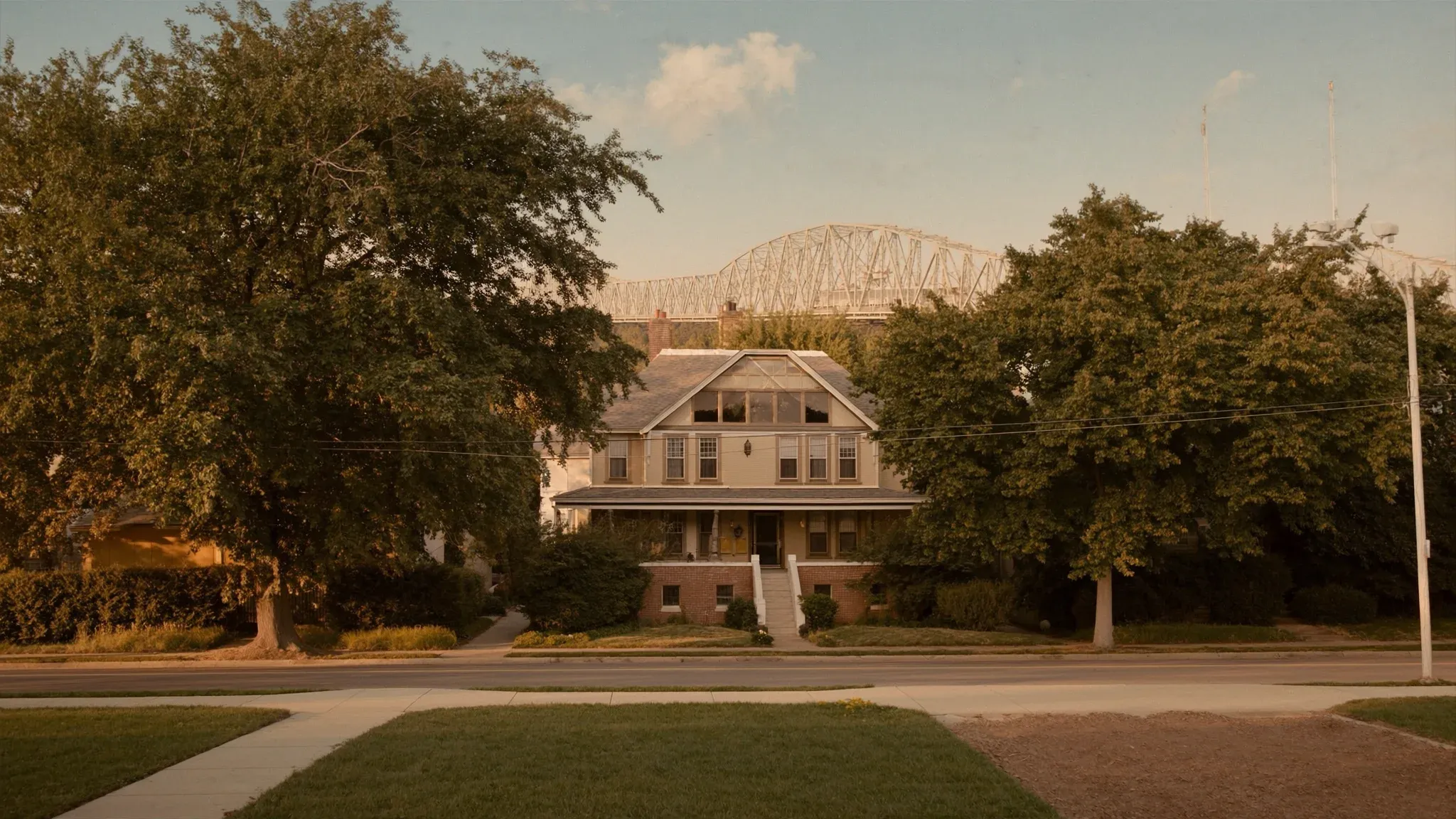
Service area · Tennessee
Foundation repair in North Chattanooga
North Chattanooga's local resource for foundation repair information. As the urban district on the north bank of the Tennessee River across from downtown Chattanooga, North Chattanooga is dominated by pre-1940 housing on the Tennessee River floodplain, with older basements that have spent decades managing river-elevation moisture. For the broader Chattanooga metro picture, see the [Chattanooga foundation repair guide](/service-area/chattanooga/).
Typical foundation type: basement
Why North Chattanooga Foundations Are Different
North Chattanooga is the urban district occupying the north bank of the Tennessee River across from downtown Chattanooga, anchored by the Walnut Street Bridge, Coolidge Park, and the Frazier Avenue commercial corridor. The district forms part of the City of Chattanooga proper rather than a separate municipality. Its residential streets predate most of the metro’s housing stock and date primarily from the 1890s through 1940s urban-growth era. The foundation-repair profile is dominated by older urban basements and by the Tennessee River floodplain conditions that have shaped the district’s soils and drainage for over a century.
This page is intentionally narrow-focused on the pre-1940 urban housing and floodplain conditions specific to the North Shore district. For broader Chattanooga metro context (regional soil patterns, hillside neighborhoods such as Signal Mountain and Lookout Mountain, modern subdivision considerations), the Chattanooga foundation repair guide covers the full picture.
Tennessee River floodplain soils
The North Chattanooga residential streets sit on Tennessee River alluvium, mixed with riverside silt, fill from successive urban-development eras, and pre-Chickamauga-Dam flood deposits dating to before the 1940 impoundment of the river upstream. The soil profile is layered, often poorly graded, and locally variable lot-to-lot. Older basements were excavated through this profile in eras before geotechnical standards, and they have spent decades managing the seasonal moisture that the riverside soil delivers.
Pre-Chickamauga-Dam flood history
Before TVA’s Chickamauga Dam closed in 1940, downtown Chattanooga and the North Shore district both experienced regular major flooding from the Tennessee River. The most famous flood of 1867 inundated significant portions of what is now North Chattanooga, and the 1917 flood remains a benchmark in local historical records. Post-dam impoundment has dramatically reduced flood frequency, but the underlying floodplain remains. Property elevations relative to the controlled Tennessee River pool levels matter for any foundation work, particularly basement modifications.
Aging basement masonry
Most North Chattanooga basements were built between roughly 1890 and 1940 using brick or stone masonry on poured or rubble footings. The mortars used in these basements were lime-based and softer than modern Portland-cement mortars. Over 80 to 130 years, the mortars have eroded, displaced, and lost adhesion. The most common basement findings in North Chattanooga are mortar-joint failure, wall bowing at the lower courses, water staining at the wall-floor joint, and efflorescence on the wall faces.
Hill City and rising-ground edges
The northern and western edges of North Chattanooga rise gradually into Hill City and onto the eastern face of Stringer’s Ridge. Housing on these higher edges sits on different soil profiles, less affected by floodplain conditions and more reflective of standard valley clay. The repair-method mix shifts accordingly as the elevation rises away from the riverfront [Wikipedia: North Chattanooga].
North Chattanooga Streets and Foundation Patterns
Foundation repair work in North Chattanooga clusters along the older residential blocks and by elevation relative to the river. The patterns below summarize what local inspections most often find:
- North Shore (Frazier Avenue corridor) . the commercial-and-residential spine, pre-1940 housing immediately adjacent to Coolidge Park and the Walnut Street Bridge, frequent basement-waterproofing work
- Hill City . the residential blocks north of Cherokee Boulevard, mix of pre-1940 and early-1900s housing
- Stringer’s Ridge edge . higher-elevation lots on the western edge, less floodplain influence
- Forest Avenue . residential grid west of Frazier, pre-1930 housing, common basement-moisture work
- Mississippi Avenue . parallel residential blocks, pre-1940 housing pattern
- Cherokee Boulevard . the historic streetcar route, mixed-use and residential, foundation-type mix
- Coolidge Park area . riverfront-adjacent residential, lowest elevation in the district, most flood-aware work
- Bell Avenue . older residential streets in the heart of the district
- Infill construction sites . the small number of newer homes built since the 2000s North Shore renaissance, mostly slab-on-grade
The pre-1940 basement housing-stock concentration is the defining characteristic.
How to Find a North Chattanooga Foundation Repair Contractor
Search results for “best foundation repair in North Chattanooga” return mostly Chattanooga providers, but only some have meaningful experience with pre-1940 basement work. The reliable evaluation criteria differ from the rest of the metro:
1. Pre-1940 basement experience
A North Chattanooga contractor needs working experience with stone-and-brick basement walls, lime-mortar repointing, basement-wall bowing repair, and aging-masonry waterproofing. These are different skill sets from modern crawl-space encapsulation or slab piering. Ask the contractor how many pre-1940 basement projects they have completed in the past year and what neighborhoods those were in.
2. Floodplain awareness
A contractor working in North Chattanooga should be able to identify the property’s elevation relative to the Tennessee River regulated pool level and any applicable FEMA-floodplain designation. Work below certain elevations carries additional compliance considerations. A contractor unfamiliar with floodplain considerations will not flag these proactively.
3. Written warranty terms
Strong pier-installation warranties run 25 years and are transferable. On North Chattanooga projects, the warranty conversation is often about basement-wall stabilization, interior drainage systems, and exterior excavation work rather than steel piering. Read how the warranty applies specifically to those scopes.
4. Engineering letter inclusion
Tennessee residential building code adopts the International Residential Code [Tennessee Department of Commerce, Codes Enforcement]. Pre-1940 basement work often requires a structural engineer’s letter that addresses both modern code compliance and accommodation of pre-modern construction practice. Engineers with North Shore experience write meaningfully different letters than engineers accustomed to subdivision slab projects.
What to Expect from a North Chattanooga Foundation Inspection
A reliable North Chattanooga inspection takes 60 to 90 minutes on site (longer than the metro standard because of pre-1940 complexity) and covers five areas:
Exterior walk-around and drainage assessment
The inspector walks the full perimeter, photographing cracks visible in brick, stone, or stucco. Drainage assessment is central in North Chattanooga: downspout discharge points, grading away from the foundation, and any signs of water tracking from neighbors’ lots. The relatively flat North Shore topography means surface water lingers, and even modest grading failures produce basement moisture.
Interior walk-through
Every interior door gets a function test. Drywall and plaster at door and window frame corners get inspected for cracks. Each room floor gets a level test. Pre-1940 homes show characteristic cumulative settlement patterns from over a century of soil-cycle exposure.
Basement inspection (the heart of every North Chattanooga visit)
The basement inspection is the centerpiece. Every basement wall gets a section-by-section condition assessment: mortar joint condition, brick or stone displacement, wall bowing using a vertical 4-foot level, water staining at the wall-floor joint, efflorescence on the wall face, evidence of past or current active leaks. Floor cracks get measured and photographed. Sump pumps and existing interior drainage systems get function tests.
Floodplain documentation
Property elevation relative to the Tennessee River regulated pool and any FEMA-floodplain designation gets noted. Lower-elevation properties get additional documentation that informs downstream permit work.
Historic-era element documentation
Any pre-1940 architectural details visible at the foundation level get photo documentation for the homeowner’s records.
The inspector then produces a written report within 24 to 48 hours. The report includes photographs, elevation measurements, and method-by-method cost ranges drawn from Bob Vila’s May 2024 Foundation Repair Cost guide, with basement-waterproofing specialty work priced separately.
Repair Methods Used Most Often on North Chattanooga Homes
Method selection in North Chattanooga is dominated by basement work rather than modern pier installation. The most-used methods, in rough order of frequency:
- Basement waterproofing . the dominant work category, including interior drainage systems, exterior excavation, and wall sealing.
- Basement-wall stabilization . tieback anchors, wall bracing, and structural-pier installation on bowed pre-1940 walls.
- Stone-and-brick repointing . mortar-joint restoration on aging masonry walls.
- Pier and beam repair . for homes with partial pier-and-beam additions to original basement construction. $700 to $25,000 per project per Bob Vila Foundation Repair Cost guide, May 2024.
- Crawl space repair and encapsulation . for the small number of partial-crawl-space homes in the district.
- Helical piers . used selectively to supplement aging footings on settled sections. $1,000 to $3,000 per pier.
- Steel push piers . rare in pre-1940 housing, limited to modern additions to historic homes.
Full pricing on the foundation repair cost guide. Symptoms and severity guidance on the foundation problems hub.
North Chattanooga Building Permits for Foundation Repair
Foundation repair in North Chattanooga is permitted through the City of Chattanooga Land Development Office because the district is part of the city proper rather than a separate municipality. Tennessee residential building code adopts the International Residential Code per the Tennessee Department of Commerce, Codes Enforcement.
Properties below the Tennessee River 100-year flood elevation may have additional FEMA-floodplain compliance considerations for substantial improvements, including some foundation modifications. The City of Chattanooga floodplain administrator handles those reviews as part of the standard permit process when triggered. Permit timelines for basement work typically run 1 to 4 weeks. Floodplain-trigger reviews can extend that timeline.
Other Tennessee Valley Communities Served
- Chattanooga, TN . the broader metro picture, including downtown and the south-of-river neighborhoods.
- St. Elmo, TN . the city’s other concentration of pre-1900 housing, at the base of Lookout Mountain.
- Hixson, TN . the next major community north along Highway 153.
Neighborhoods served
North Chattanooga neighborhoods
- North Shore
- Frazier Avenue corridor
- Hill City
- Stringer's Ridge edge
- Forest Avenue
- Mississippi Avenue
- Cherokee Boulevard
- Coolidge Park area
- Bell Avenue
Questions
North Chattanooga foundation repair FAQs
Why are foundation problems common in North Chattanooga?
How much does foundation repair cost in North Chattanooga?
What permits are required for foundation repair in North Chattanooga?
How long have foundation contractors served North Chattanooga?
What North Chattanooga streets need foundation repair most often?
Do you offer free inspections in North Chattanooga?
What is the typical foundation type in North Chattanooga?
Free inspection
Free North Chattanooga foundation inspection
On-site elevation survey, written quote within 24 hours, no obligation.