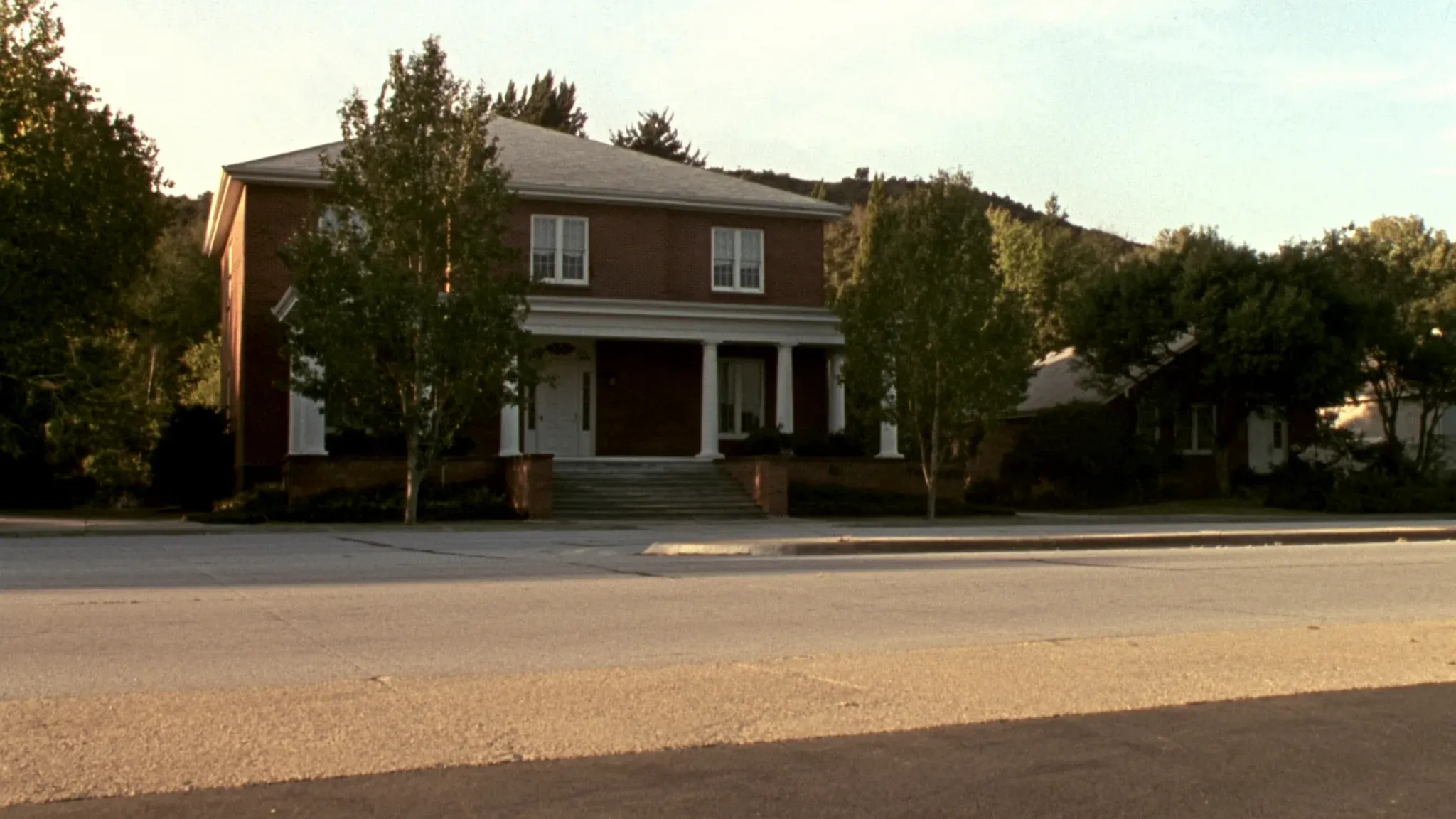
Service area · Tennessee
Foundation repair in Cleveland
Cleveland's local resource for foundation repair information. As the seat of Bradley County and the second-largest metro in southeast Tennessee, Cleveland sits on the floor of the Great Valley with deep expansive clay soils and a housing stock that runs from pre-1900 downtown homes to slab-on-grade post-1980 subdivisions. Compare methods, 2026 cost ranges, and the patterns that drive repair demand here.
Typical foundation type: mixed
Why Cleveland TN Foundations Are Different
Cleveland is the seat of Bradley County and the second-largest city in southeast Tennessee, with a 2020 Census population of 47,356 [Wikipedia: Cleveland, Tennessee]. The city sits on the floor of the Great Valley of East Tennessee, roughly 30 miles northeast of Chattanooga along the I-75 corridor. Unlike Chattanooga’s hilly Ridge-and-Valley terrain or Signal Mountain’s sandstone-capped plateau, Cleveland sits on a relatively flat valley floor underlain by deep, deeply weathered limestone-derived clay soils. That geological setting drives a foundation-repair pattern that is more uniform and more predictable than the steep-and-mixed terrain to the southwest.
Great Valley clay soils
The Cleveland soils are dominantly red to brown clay loam developed from weathering of the Knox Group dolomite and limestone bedrock that floors the Great Valley. Cleveland sits in the Bradley County soil region, where the clay weathering profile commonly runs 10 to 30 feet deep before reaching residual bedrock. The deeper the clay, the more pronounced the seasonal wet-dry swing across the upper soil profile.
Expansive clay and the wet-dry cycle
Expansive clay components in regional soils swell when wet and shrink when dry [Wikipedia: Expansive clay]. Cleveland’s mean annual rainfall runs roughly 53 inches, distributed unevenly across the year with a wet spring, a relatively dry late summer, and a moderate fall. The result is a strong annual moisture cycle in the upper soil profile. Slab-on-grade homes built in post-1980 subdivisions sit directly on this cycling soil, with limited tolerance for differential movement.
Topographic uniformity
Cleveland is geographically flatter than Chattanooga or Signal Mountain. Local relief across the city is modest, with the most notable elevation changes appearing along the South Mouse Creek and Candies Creek drainages. The flat topography simplifies foundation work in one direction (no hillside access issues, no slope-creep concerns) and complicates it in another (drainage corrections rely on grading rather than gravity, and standing water issues on flat lots are persistent).
Housing-era split
Cleveland’s foundation-repair pattern is meaningfully driven by housing era. The pre-1940 housing in downtown Cleveland and around Lee University uses basement or crawl-space construction with pre-modern footing depth standards. The post-1980 subdivisions north of the city off Paul Huff Parkway and Georgetown Road use slab-on-grade construction almost exclusively. The two housing eras produce different failure modes and benefit from different repair approaches.
Cleveland TN Neighborhoods and Foundation Patterns
Foundation repair work in Cleveland clusters by housing era and by location relative to the I-75 corridor. The neighborhood patterns below summarize what local inspections most often find:
- Downtown Cleveland . pre-1940 housing, mix of basement and crawl-space, frequent basement-waterproofing and pier-rot work
- Centenary district . older residential streets near the Centenary Avenue corridor, basement and crawl-space mix, moisture-driven work
- Lee University neighborhoods . mix of pre-1940 student-area housing and mid-century single-family, common crawl-space moisture work
- North Cleveland and Paul Huff Parkway corridor . post-1990 subdivisions, predominantly slab-on-grade, slab settlement and perimeter cracking
- Georgetown Road corridor . newer subdivisions, slab-on-grade, similar pattern to the Paul Huff corridor
- South Cleveland . older mid-century neighborhoods, mix of foundation types, modest topographic variation
- Stuart Heights . established neighborhood between downtown and the Lee University area, crawl-space and basement mix
- Rural Bradley County (outside city limits) . pier-and-beam and crawl-space predominant, scattered settlement patterns
The slab-versus-basement split is the strongest predictor of what method a given home needs.
How to Find a Cleveland TN Foundation Repair Contractor
Search results for “best foundation repair in Cleveland Tennessee” return a mix of local Bradley County providers and Chattanooga-based contractors with Cleveland service-area coverage. The reliable evaluation criteria are:
1. Written warranty terms
Strong pier-installation warranties run 25 years and are transferable to a future homeowner. In Cleveland’s expansive-clay soils, warranty matters more than in bedrock-founded mountain homes because the surrounding soil continues to cycle wet-dry across the lifetime of the repair. Read the actual coverage language. Transferability protects resale value.
2. Engineering letter inclusion
Tennessee residential building code adopts the International Residential Code [Tennessee Department of Commerce, Codes Enforcement]. Pier-installation permits issued by the City of Cleveland Building & Codes Department or Bradley County typically require a stamped structural engineer’s letter as part of the permit application. Quotes that include the engineering letter are more transparent than those that exclude it.
3. Slab versus crawl-space experience
A Cleveland contractor needs to be fluent in both slab piering (for the post-1980 northern subdivisions) and crawl-space repair (for the downtown and Lee University neighborhoods). During the inspection, ask which method category the contractor handles more frequently and which one matches your home. A slab specialist quoting a crawl-space project, or a crawl-space specialist quoting a slab project, is going to produce a less reliable scope than someone who works both regularly.
4. Diagnostic discipline
A reliable foundation contractor diagnoses the cause before recommending a method. On flat-terrain Cleveland properties, drainage failures often mimic settlement symptoms. The proper diagnostic includes elevation measurement across multiple rooms, exterior crack documentation, and (where relevant) crawl-space or basement inspection. The written report should explain what was measured and what it indicates.
What to Expect from a Cleveland TN Foundation Inspection
A reliable Cleveland inspection takes 30 to 60 minutes on site and covers four areas:
Exterior walk-around
The inspector walks the full perimeter, photographing cracks visible in brick veneer, block walls, or stucco. Stair-step cracks at corners get priority documentation. Drainage conditions get noted, including downspout discharge points and grading away from the foundation. On flat-terrain Cleveland lots the drainage assessment is more central than on hillier metros because surface water lingers longer where the ground is flat.
Interior walk-through
Every interior door gets a function test. Drywall at door and window frame corners gets inspected for cracks. Each room floor gets a level test. Cleveland slab homes show a distinctive perimeter-versus-center settlement pattern that the interior walk-through is designed to surface.
Crawl-space or basement inspection
For older Cleveland housing, the crawl-space or basement inspection is the heart of the visit. Every visible masonry pier gets checked for tilt, cracking, settlement. Basement walls get a 4-foot-level check for bowing along each wall. Water staining at the wall-floor joint and efflorescence get documented.
Slab inspection (newer subdivisions)
For post-1980 slab-on-grade homes, the slab inspection covers exterior perimeter cracking, interior tile cracking, doorway gaps, and any indication of differential settlement between the interior of the slab and its perimeter. The interior-versus-perimeter relationship is the key diagnostic for distinguishing center-of-slab heave from edge settlement.
The inspector then produces a written report within 24 hours. The report includes photographs, elevation measurements, and method-by-method cost ranges drawn from Bob Vila’s May 2024 Foundation Repair Cost guide.
Repair Methods Used Most Often on Cleveland TN Homes
Method selection in Cleveland tracks the housing-era split. The most-used methods, in rough order of frequency:
- Steel push piers . the dominant method on post-1980 slab homes because the deep clay weathering profile rewards driven-pier installation. $1,000 to $3,000 per pier per Bob Vila Foundation Repair Cost guide, May 2024.
- Helical piers . used where torque-measured installation is preferred over drive force. $1,000 to $3,000 per pier.
- Slab foundation repair . used on the newer subdivisions for slab leveling and concrete crack injection.
- Basement waterproofing . for downtown Cleveland and Lee University area basements with seasonal moisture intrusion.
- Crawl space repair and encapsulation . for older crawl-space housing. $700 to $25,000 per project.
- Pier and beam repair . for rural Bradley County housing outside city limits.
- Mudjacking and polyurethane foam leveling . for driveway and patio slab lifting.
Full pricing on the foundation repair cost guide. Symptoms and severity guidance on the foundation problems hub.
Cleveland TN Building Permits for Foundation Repair
Foundation repair inside Cleveland city limits is permitted through the City of Cleveland Building & Codes Department. Properties in the unincorporated portions of Bradley County are permitted through Bradley County’s building department instead. Tennessee residential building code adopts the International Residential Code per the Tennessee Department of Commerce, Codes Enforcement.
Permit timelines in Cleveland typically run 1 to 3 weeks for routine pier-installation work, slightly faster than the larger Chattanooga and Hamilton County offices. Bradley County permits track a similar timeline. A licensed local contractor handles permit submission, plan-review coordination, and inspection scheduling as part of the project scope.
Other Tennessee Valley Cities Served
- Chattanooga, TN . the metro core, 30 miles southwest along I-75.
- Ooltewah, TN . the Hamilton County community between Cleveland and Chattanooga.
- Dalton, GA . separate Georgia metro across the state line.
Neighborhoods served
Cleveland neighborhoods
- Downtown Cleveland
- Centenary
- Lee University area
- Paul Huff Parkway corridor
- Georgetown Road
- North Cleveland
- South Cleveland
- APD-40 corridor
- Stuart Heights
Questions
Cleveland foundation repair FAQs
Why are foundation problems common in Cleveland TN?
How much does foundation repair cost in Cleveland TN?
What permits are required for foundation repair in Cleveland TN?
How long have foundation contractors served Cleveland TN?
What Cleveland TN neighborhoods need foundation repair most often?
Do you offer free inspections in Cleveland TN?
What is the typical foundation type in Cleveland TN?
Free inspection
Free Cleveland foundation inspection
On-site elevation survey, written quote within 24 hours, no obligation.